
Naegleria fowleri, the brain eating amoeba, and the simple thing that stops it
Every warm season, Karachi loses people to Naegleria fowleri, an amoeba that lives in warm, untreated water. The fear is real, but so is the protection. The first thing to understand is the one most people get wrong.

It is not about drinking your water
You cannot catch it by swallowing water. The amoeba only harms you if untreated water goes up your nose, during ablution, bathing, or nasal rinsing, from where it can reach the brain. That single fact changes what you need to protect.
What the record shows
Naegleria fowleri case tracker, Karachi
Reported deaths by year, as estimated from press and public health reports. These are not official figures, since the health department publishes no series, so tap any year to open its source.
Every figure here is a reported estimate compiled from the press and academic sources, treated as indicative rather than official. Most victims had never been swimming, and were infected by ordinary tap and tank water.
Latest reported case: a death in Korangi, Karachi, July 2026How it reaches people
The amoeba thrives in warm, still, untreated freshwater. In Pakistani homes the risk is not the glass you drink, it is the water that goes up the nose during wudu, a shower, or nasal rinsing, especially in the summer heat before the monsoon, when water sits warm in underground and rooftop tanks.
Why Karachi, why summer
Warm water is what the amoeba needs. Through the hottest months, water stored in tanks and carried through pipes with little or no chlorine warms to exactly the range it favours, and Karachi records new cases almost every year, most in people who never went near a lake or a pool.
Not only Karachi
Almost all reported cases have come from Karachi, where the warm coastal water and the testing both sit. But this is not a Karachi problem alone. Lahore recorded its first confirmed case in 2023, cases have been linked to Hyderabad and Quetta, and the amoeba lives in warm freshwater everywhere. Anywhere water sits warm and poorly chlorinated, and is drawn up the nose during ablution or bathing, the danger is real. A city with no reported cases is not a city with no risk, only one with less testing.
What Naegleria fowleri actually is
Naegleria fowleri is a microscopic, single celled organism, a free living amoeba that lives naturally in warm freshwater and in soil. It is neither a bacterium nor a virus. It feeds on the bacteria around it, and for almost everyone who meets it in the environment it does no harm at all.
It exists in three forms. Most of the time it is a trophozoite, the active, feeding form, and this is the only form that can infect a person. When the water changes or food runs short, it can briefly become a swimming flagellate that moves to find better conditions. And when conditions turn hostile, when the water cools, dries, or loses its food, it can wall itself into a cyst, a hardy dormant shell in which it waits, until conditions improve and it emerges again.
That cyst is why prevention has to be thorough. The dormant cyst is several times more resistant to chlorine than the active amoeba, so a treatment that clears the active form can leave cysts behind to revive later. Keeping the water treated is not a single act, it is something to maintain.
Why cleaning the tank matters as much as chlorine
Chlorine kills Naegleria fowleri, and a maintained chlorine guard in clear water is the most effective protection a household has. But whether that chlorine works at all is decided by the state of the tank.
A tank that is not cleaned builds up sediment on its floor and a film of scum, called biofilm, on its walls and pipes. That film is not simply dirt. It shelters amoebae and their cysts inside it, feeds them, and soaks up chlorine before it can reach them. Studies of drinking water systems have found that an amoeba sheltering in biofilm can need many times the ordinary chlorine dose to be killed, because the film both consumes the disinfectant and blocks it from reaching what hides beneath.
This is why the advice is always both together. Chlorine poured into a dirty tank is far weaker than the same chlorine in a clean one, since the sediment and the biofilm drink it up and hide the organism. A tank that is chlorinated but never cleaned can still harbour the amoeba in its film, and a tank that is cleaned but left untreated simply warms and is colonised again. Clean the tank to strip away the biofilm and the sediment, then keep a chlorine guard in the clear water it holds. Neither step alone closes the door, the two together do.
The warning signs to know
The infection, primary amoebic meningoencephalitis, moves quickly, often over a few days, so recognising it early and acting at once is what matters. Its signs resemble other forms of meningitis, so the single most useful thing to tell a doctor is that untreated warm water recently went up the nose.
In the first days
- A severe headache
- Fever
- Nausea and vomiting
- A change in the sense of smell or taste
As it worsens
- A stiff neck
- Confusion and difficulty paying attention
- Loss of balance
- Seizures
- Hallucinations
Anyone showing these signs after untreated water has gone up the nose needs hospital care without delay, since every hour counts. This page is written to help you prevent and understand the danger, it is not medical advice, and it does not replace a doctor.
How to protect your home
The protection is simple, and it is the same public health advice Pakistani health officials give every summer: keep a chlorine guard in your stored water, and keep untreated water out of your nose.
- 1
Clean the tanks before summer
Empty and scrub the underground and overhead tanks before the heat sets in. Our guide shows you how.
- 2
Chlorinate the stored water
Keep a chlorine guard in the tank so the water stays protected as it warms and waits. Follow the amount on the pack.
- 3
Guard the nose
For ablution and nasal rinsing, use water that has been properly treated, or boiled and cooled, and do not force untreated water up the nose.
Chlorine works when the water is clear and the guard is kept up. It is far less effective in cloudy water, so cleaning the tank and keeping the water clear go hand in hand with chlorinating it.
Myths and facts
You catch it by drinking contaminated water.
FactYou do not. It causes harm only when water goes up the nose. Water with the amoeba in it, swallowed, does not cause the infection.
It spreads from one person to another.
FactIt does not. You cannot catch it from someone who is infected. It comes only from the environment, from warm untreated water.
Only swimmers are at risk.
FactIn Karachi most cases have been in people who never went swimming, infected by ordinary tap and tank water during ablution or bathing.
Adding chlorine once is enough.
FactIt is not. The cyst form and the biofilm in a tank resist chlorine, so the water must be kept clean and the chlorine maintained, not added once and forgotten.
There is nothing an ordinary household can do.
FactThere is, and it is simple. Clean the tank, keep a chlorine guard in the clear water, and keep untreated water out of the nose.
Common questions
Can you get Naegleria fowleri from drinking water?
No. The amoeba only causes infection when water goes up the nose and reaches the lining high inside it. Drinking water that contains it does not cause the disease.
Is Naegleria fowleri contagious?
No. It does not pass from person to person. Every case comes from contact with warm, untreated water in the environment.
Does chlorine kill Naegleria fowleri?
Yes, a maintained level of chlorine in clear water kills it. But the cyst form resists chlorine several times more than the active amoeba, and biofilm in a dirty tank shelters it, so the water must be kept clean for the chlorine to work.
Is chlorinating the tank enough on its own?
No. Chlorine in a tank thick with sediment and biofilm is far less effective, since the film consumes the chlorine and hides the amoeba. The tank must be cleaned as well as chlorinated.
Does boiling water kill it?
Yes. Water that has been boiled and then cooled is safe for nasal rinsing and ablution, since boiling kills the amoeba.
How can I protect my family?
Clean your underground and rooftop tanks, keep a chlorine guard in the clear stored water, and use treated or boiled and cooled water for ablution and nasal rinsing.
Guard your tanks against Naegleria fowleri this summer
Through Karachi's hottest months, water sits warm in underground and rooftop tanks, and that is exactly where Naegleria fowleri, the brain eating amoeba, takes hold once the chlorine has gone. These are the large, tank sized Aquatabs tablets, one dose holds a chlorine guard across your whole stored supply, protecting your household from this disease right through the whole of summer, not for a limited time. Order now with free packs included, paid on delivery.
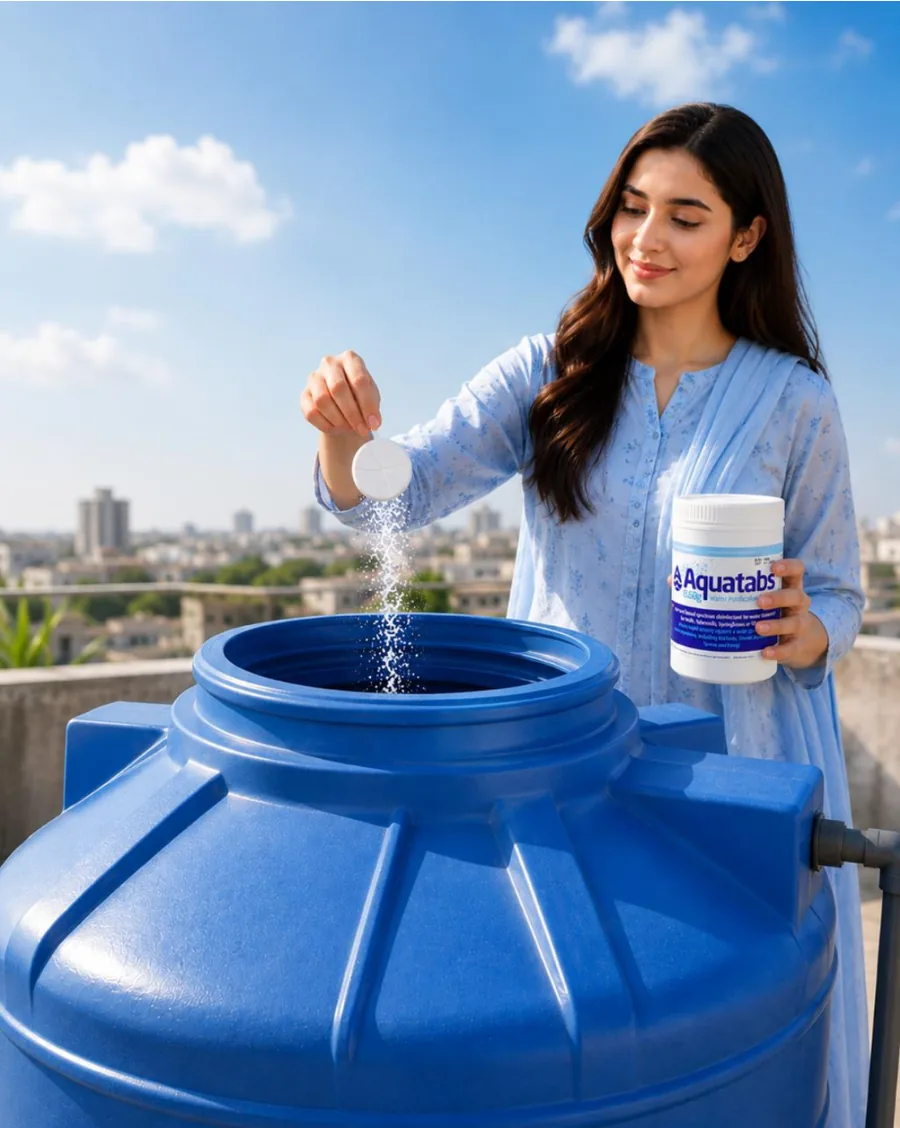 Chlorine kills Naegleria fowleri
- 1 pack of 20 tablets, 33mg
- 1 pack of 20 tablets, 67mg
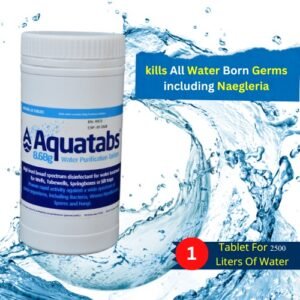
- 1 pack of 20 tablets, 33mg
- 1 pack of 20 tablets, 67mg
- 1 pack of 6 tablets, 500mg
Protect your family this summer
See the full picture of your household water, or find the right Aquatabs for your tank.
Where these figures come from
The facts on this page are drawn from the United States Centers for Disease Control and Prevention, the World Health Organization, provincial health departments and the national press, and peer reviewed studies of Naegleria fowleri, its life cycle, and its disinfection in water systems. Dosing is not given here, always follow the pack.