
Clean Water for Dairy and Cattle Herds: Protecting Livestock Health and Yield in Pakistan
4 min read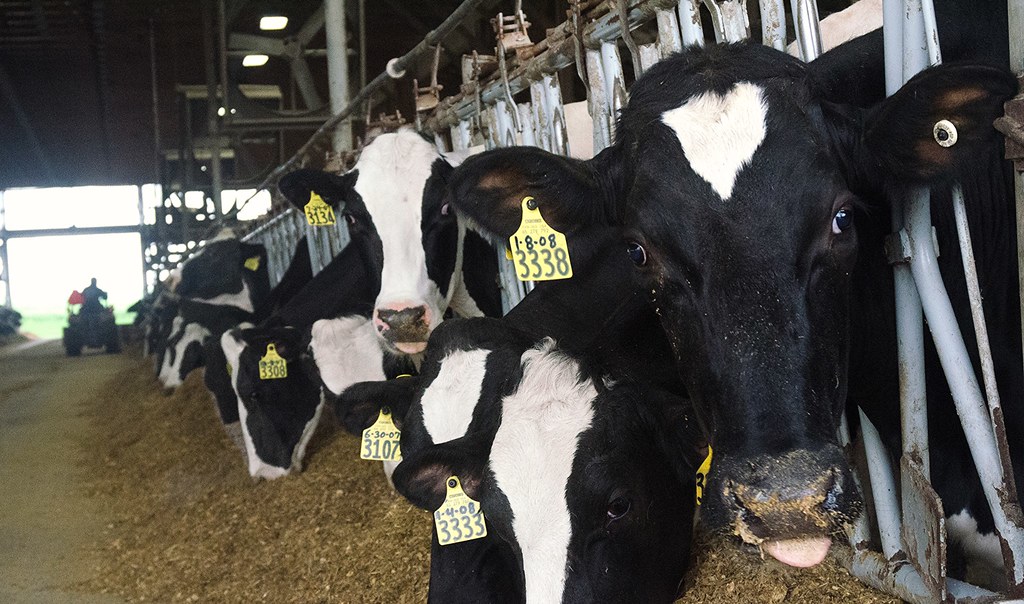
Pakistan's livestock sector is one of the foundations of the national economy, contributing roughly eleven percent of GDP and supporting the livelihoods of tens of millions of rural families. The country is among the largest milk producers in the world, with a herd of cattle and buffalo that ranks among the biggest in Asia. Yet across the smallholder farms and commercial dairies that sustain this output, the quality of drinking water available to animals receives far less attention than feed, vaccination, or shelter. Water that is bacteriologically unsafe, or contaminated with coliform bacteria, chemical residues, or suspended particulates, does not merely pose an ethical concern. It quietly suppresses milk yields, compromises reproductive performance, spreads disease through the herd, and raises the cost of veterinary care, all while appearing ordinary and odourless to the farm operator who sees no reason to question it.
Pakistan's Water Quality Crisis: The National Evidence Base
Pakistan is classified by the World Bank as one of the most water-stressed countries in the world, under pressure from a rapidly growing population, declining groundwater tables, and seasonal variability driven by a changing climate. The WHO and UNICEF Joint Monitoring Programme reported in its most recent cycle that a substantial proportion of Pakistan's rural population still relies on water services that do not meet the standard for safely managed supply, a benchmark that requires the source to be on-premises, available when needed, and free from faecal contamination. The Pakistan Council of Research in Water Resources, which operates the National Water Quality Monitoring Programme, has consistently found through repeated national surveys that the majority of water samples collected from rural sources fail WHO bacteriological standards, with coliform contamination identified as the dominant cause of failure across multiple testing cycles.
According to repeated National Water Quality Monitoring Programme surveys conducted by PCRWR, the majority of tested rural water samples in Pakistan do not meet WHO bacteriological safety standards, with faecal coliform contamination identified as the leading cause of failure.
The principal risks that this environment creates for livestock operations are well documented and consistent:
- Bacteriological contamination, primarily faecal coliform and E. coli, enters animal watering points from open channels, unlined troughs, and shared surface water sources
- Groundwater in agricultural zones frequently carries elevated nitrate concentrations from fertiliser runoff, suppressing haemoglobin function and reducing oxygen-carrying capacity in young animals
- Seasonal flooding redistributes surface contamination widely, and floodwater routinely reaches farm ponds, kaccha channels, and uncovered storage tanks used to water herds
- Leptospira and Brucella, bacterial pathogens transmitted through water and soil contact, are endemic in cattle-dense districts of Punjab and Sindh, contributing to abortion events and herd infertility
- Open troughs shared between species permit cross-species transmission of gastrointestinal pathogens, particularly where poultry and cattle share a common water point
How Contaminated Water Suppresses Dairy Yield and Herd Health
Veterinary research conducted in South Asian settings, including peer-reviewed work supported by FAO and national agricultural universities in Pakistan, consistently demonstrates a measurable relationship between water quality and productive performance in dairy cattle and buffalo. High-yielding animals require large volumes of clean water every day during peak lactation, and the requirement rises in proportion to milk output because milk is composed of approximately 87 percent water by mass. When water is contaminated, animals reduce voluntary intake, a physiological response well documented in ruminant nutrition literature. Reduced intake directly suppresses dry matter consumption and, consequently, milk synthesis. The practical outcome, observed repeatedly at farm level, is lower daily yield per animal, shortened lactation periods, and reduced conception rates, compounding the financial pressure on smallholder operators who function on narrow margins.
Chronic low-level exposure to bacterially contaminated water also taxes the immune system continuously. Animals in this state are more susceptible to mastitis, respiratory infection, and tick-borne disease, and they respond less robustly to vaccination. The cost of treating a mastitis case, or managing a Brucella-positive reactor, falls entirely on the farmer. In the smallholder context, a single serious disease event can eliminate the profit from an entire lactation cycle and impose a veterinary debt that is not recovered until the following season.
Treating Stored Water: A Point-of-Use Measure That Fits Any Farm
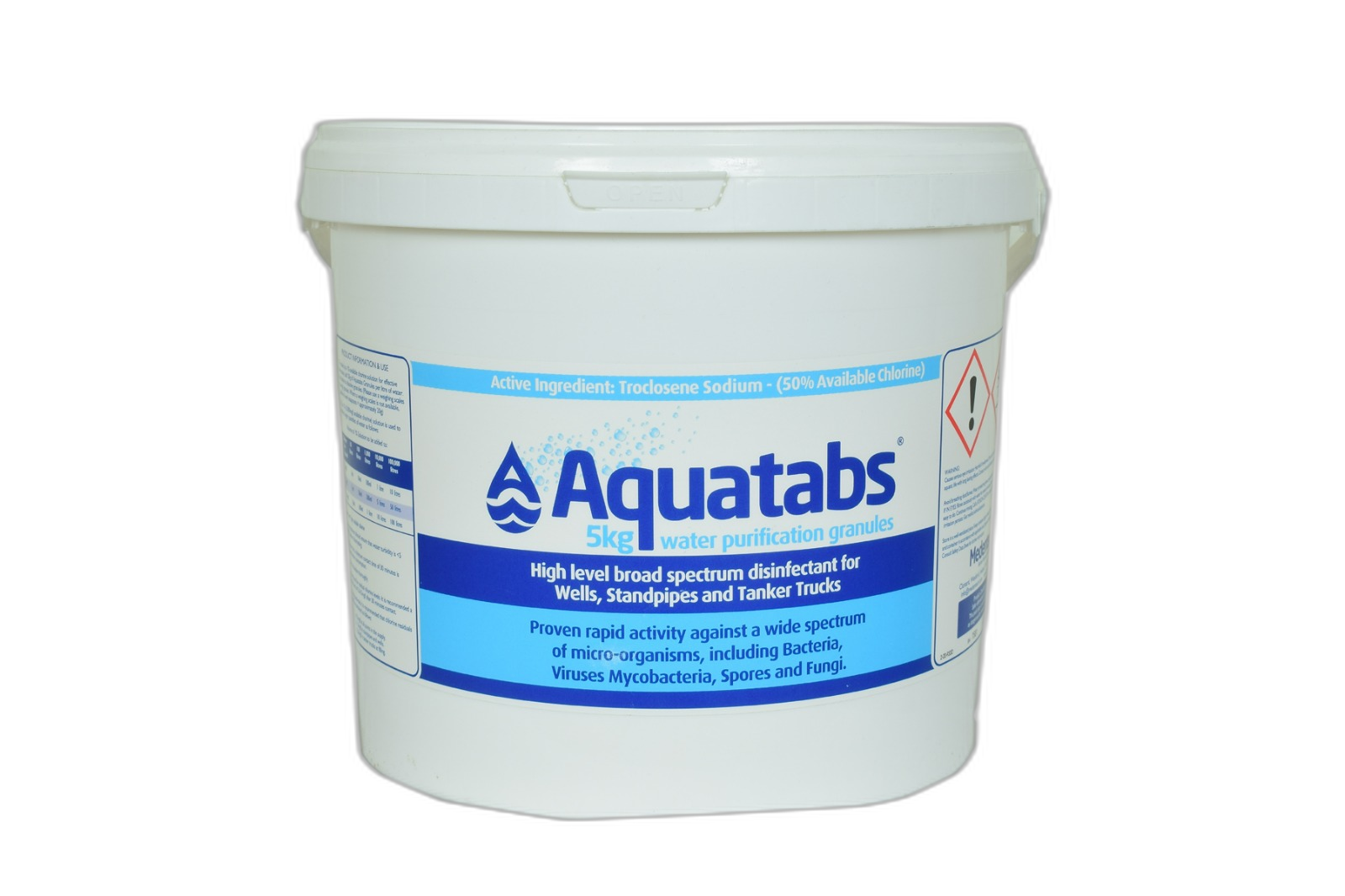
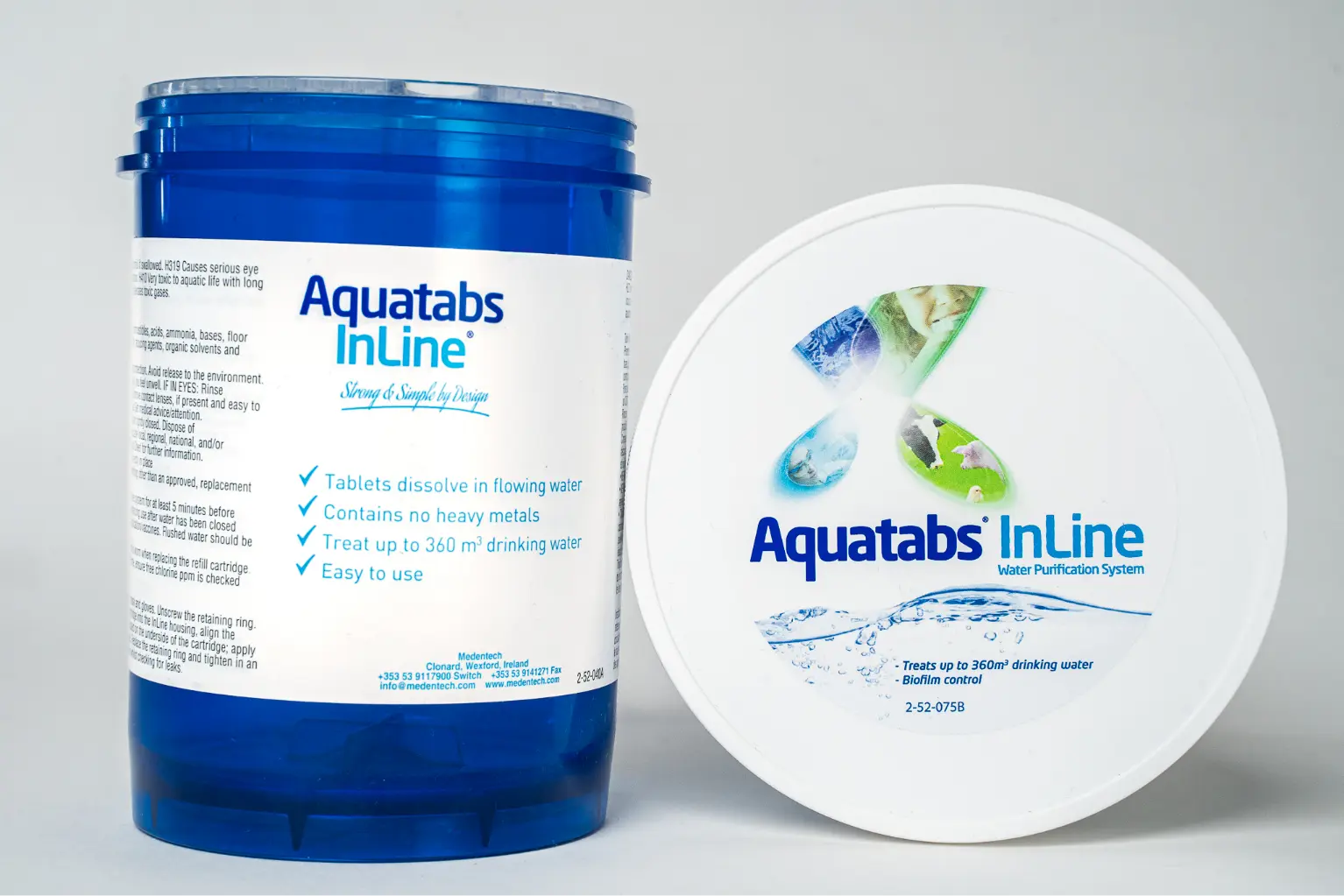
Chlorine-based tablet disinfection addresses this problem through a straightforward and well-established mechanism. Treating the stored water in animal drinking troughs and tanks with a correctly dosed Aquatabs tablet releases active chlorine into the water column, which eliminates bacterial pathogens before animals drink. For the correct dosage and the tablet-to-volume ratio appropriate for the size of vessel being treated, farmers should follow the instructions printed on the product packaging. The intervention requires no infrastructure, no electricity, no specialist training, and no capital expenditure beyond the tablets themselves, and it can be adopted on the same day the decision is made. For Pakistan's dairy and livestock sector, where disease events are financially catastrophic and margins leave no room for preventable losses, treating the herd's drinking water consistently represents one of the highest-return protective investments available to a farm operator.
Sources: WHO and UNICEF Joint Monitoring Programme; PCRWR National Water Quality Monitoring Programme; World Bank; Pakistan Economic Survey; FAO.
Check the risk where you live
Answer three quick questions about your own water, and see what it means for your home. It takes less than a minute.
The right products for this
Related reading
- Case study · KarachiKarachi's Tanker Water Crisis: Contamination Risk and the Case for Point-of-Use Treatment
- Case study · LahoreLahore's Compounding Water Crisis: Arsenic in the Aquifer and Contamination in the Network
- Case study · FaisalabadWhen the Ground Itself Cannot Be Trusted: Arsenic and Industrial Contamination in Faisalabad's Drinking Water