
Karachi's Tanker Water Crisis: Contamination Risk and the Case for Point-of-Use Treatment
4 min read
Karachi, Pakistan's largest city and commercial capital, faces a drinking water crisis that is structural in nature. The Karachi Water and Sewerage Board, the principal public utility, supplies water to only a fraction of a metropolitan population estimated at over fifteen million people. Vast stretches of the city, in particular the low-income settlements that ring the periphery and cluster along the coastline, receive no piped supply at all. In their place, a large and largely unregulated private tanker market has grown to fill the gap, carrying water of unknown provenance and variable quality into storage tanks, drums, and containers across the city. For the families who depend on this supply, the question of what arrives in that tanker, and what happens to it after it sits in an open drum under the Karachi sun, is a question with direct consequences for daily health.
The Quality of Tanker Water
The absence of a continuous, pressurised piped supply means that water in Karachi passes through many hands and many containers before it reaches a household tap or storage vessel. Each transfer, each open tank, and each day of storage creates an opportunity for bacteriological contamination. Multiple independent studies and water quality assessments conducted in Karachi have identified total coliform bacteria and Escherichia coli in tanker water samples at concentrations that far exceed the limits set by Pakistan's national drinking water quality standards. PCRWR, the Pakistan Council of Research in Water Resources, has documented through its National Water Quality Monitoring Programme that a large proportion of drinking water samples drawn from urban distribution points across the country fail basic microbiological standards. The tanker supply, which bypasses even the limited treatment that municipal water receives, poses a greater risk still, carrying no guarantee of source, treatment quality, or transport hygiene.
Approximately forty per cent of hospital visits in Pakistan are linked to waterborne illness, according to UNICEF and national health reporting, and during the 2022 monsoon floods in Sindh, UNICEF recorded more than ninety thousand diarrhoea cases in a single day, a figure that dramatises the scale of the underlying contamination risk that Karachi's tanker-dependent population navigates not seasonally but every day of the year.
Salinity, Arsenic, and Groundwater Hazards
Beyond bacteriological risk, Karachi's groundwater, upon which many tanker operators draw, is affected by two further quality concerns. The city's coastal geography means that saline intrusion has degraded many shallow aquifers, rendering their water unsuitable for sustained human consumption. Elevated salinity in drinking water places a cumulative burden on the kidneys and contributes to hypertension over years of regular use. Separately, arsenic contamination in groundwater is a concern documented across Sindh province by PCRWR and other researchers, and while the most severe arsenic belts lie in the interior of the province, the groundwater sources that supply Karachi's tanker operators are not uniformly tested or regulated, leaving the risk unquantified and unmanaged for most consumers. The absence of routine quality monitoring at the point of abstraction means that households have no reliable way to know what they are storing.
According to the WHO and UNICEF Joint Monitoring Programme, only around thirty-six per cent of Pakistan's population has access to safely managed drinking water, a figure that conceals sharper deficits in the urban peripheries where tanker dependence is most concentrated.
Key risks facing tanker-dependent households in Karachi:
- Bacterial contamination from open storage, repeated handling, and tanker vessels that are rarely cleaned or independently inspected
- Elevated salinity from coastal aquifer drawdown, which damages kidney function and raises blood pressure over prolonged consumption
- Unregulated source water, abstracted from points that carry no certification of treatment or quality
- Seasonal intensification, as the long Karachi summer accelerates bacterial growth in warm, stored water
- Cross-contamination risk in areas where ageing and leaking distribution infrastructure sits alongside stored tanker supply
Treating Stored Water at the Point of Use
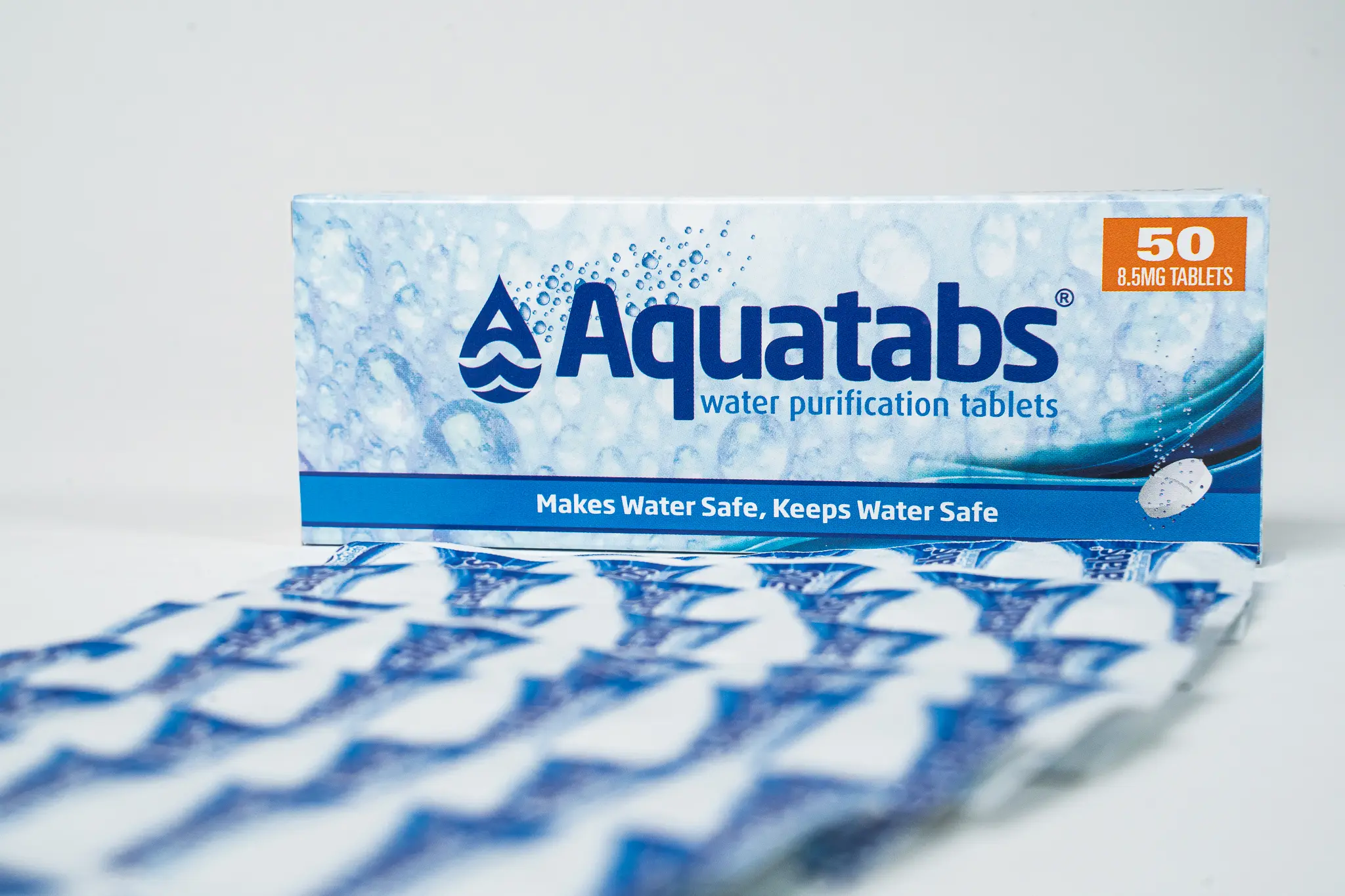
The nature of Karachi's water supply means that treatment must occur at the point of storage or consumption, not upstream in a supply chain that cannot be regulated household by household. Point-of-use water treatment is the intervention that breaks the contamination chain regardless of the source from which water originally came. Aquatabs, the tablet form of sodium dichloroisocyanurate manufactured by Medentech of Wexford, Ireland, and distributed in Pakistan exclusively by Mirza Traders since 2008, is formulated precisely for this purpose. A single tablet dropped into a stored volume of water delivers a measured dose of chlorine that inactivates bacterial and viral pathogens, including the coliform organisms and Escherichia coli most commonly associated with contaminated tanker water. Dosing instructions and the appropriate tablet size for the volume of water being treated are printed on the pack, and they should always be followed as directed. For any Karachi household drawing water from a tanker, a drum, or an overhead or underground storage tank, treating that water before consumption is a straightforward, low-cost act that eliminates the bacteriological hazard that an unregulated supply chain has introduced.
Sources: WHO and UNICEF Joint Monitoring Programme (JMP); PCRWR National Water Quality Monitoring Programme; UNICEF Pakistan (waterborne illness hospital visits; 2022 Sindh flood diarrhoea figures).
Check the risk where you live
Answer three quick questions about your own water, and see what it means for your home. It takes less than a minute.
The right products for this


Related reading
- Case study · LahoreLahore's Compounding Water Crisis: Arsenic in the Aquifer and Contamination in the Network
- Case study · FaisalabadWhen the Ground Itself Cannot Be Trusted: Arsenic and Industrial Contamination in Faisalabad's Drinking Water
- Case study · MultanArsenic and Salinity: The Hidden Chemical Crisis in Multan's Groundwater