
From Pipe to Storage Tank: Bacterial Contamination of Drinking Water in Hyderabad
6 min read
Hyderabad, Pakistan's second major urban centre in Sindh province and home to well over a million and a half residents, faces a drinking water crisis that is both structural and domestic in character. The Pakistan Council of Research in Water Resources documented that all fifteen monitored supply sources in the city were unfit for human consumption, with bacteriological contamination the dominant cause, alongside turbidity and elevated iron levels. Beyond the supply infrastructure, a second hazard arises inside the home: water that arrives at a household may be relatively free of contamination at the point of entry, yet become heavily colonised by pathogens during storage in open rooftop tanks, clay pots, and plastic drums. This dual pathway, the compromised distribution network combined with household recontamination, defines the water safety challenge for residents of Hyderabad and places their health at measurable risk every time water is consumed without treatment.
A Supply System Under Severe Strain
The PCRWR has documented water quality across Pakistan's major cities over several monitoring cycles, and the picture for Hyderabad is among the most serious on record. All fifteen supply sources monitored in the city were found to be delivering water unfit for human consumption, with bacteriological contamination identified in 93 per cent of those sources. Across the wider Sindh province, a survey of 460 water samples drawn from fourteen districts found that 83.5 per cent were unsafe for drinking, with bacteria the leading contaminant at 69 per cent of affected samples, followed by arsenic, nitrate, and fluoride. These findings are consistent with the national picture: an analysis of over seven thousand water samples drawn from distribution systems across Pakistan found that more than 71 per cent contained total coliform bacteria, and nearly 59 per cent tested positive for fecal coliform or Escherichia coli, the indicator organisms that signal the presence of sewage contamination. A principal systemic cause is the proximity of water supply pipes to sewerage lines throughout ageing urban networks: at moments of low pressure, contaminated material is drawn into the supply, and residents downstream receive water that was never safe to begin with.
The severity of Hyderabad's water contamination became most visible between November 2016 and December 2018, when the district became the epicentre of an outbreak of extensively drug-resistant typhoid fever, caused by a strain of Salmonella Typhi that resists multiple classes of antibiotics. The World Health Organization's disease outbreak notification of December 2018 recorded 5,274 confirmed cases nationwide, of which 27 per cent, more than 1,400 people, were reported in Hyderabad. At that time, all four water treatment plants in the district were found to be non-functional and were supplying contaminated water to residents, a condition identified as a central contributing factor in the spread of infection. In response, public health authorities distributed chlorine tablets to affected communities in Hyderabad as an emergency point-of-use intervention, a measure that underscored how central household-level water treatment becomes when municipal systems fail.
The Household Storage Problem
Even when supply water tests relatively clean at the point of entry into a home, the act of storing it introduces a fresh contamination pathway. Research on point-of-use water quality in Pakistan and across South Asia confirms that contamination levels in household stored water are consistently higher than at the source: in households that do not treat their water, the proportion of samples showing high contamination rises from approximately 20 per cent at the source to 34 per cent in stored water at the point of consumption. Escherichia coli has been detected in samples drawn from household taps in Pakistan even when no fecal coliform was present in the supply line or tube well from which that water originated, demonstrating that the storage container itself, the dipper or cup used to draw water from a tank, and contact with unwashed hands are sufficient vectors for recontamination. Once a biofilm of coliform organisms establishes itself on the interior wall of a storage vessel, it can seed fresh water with pathogens on every refill, even after the vessel appears to have been rinsed.
The storage vessels common in Hyderabad households, rooftop water tanks, clay pots, and plastic drums, are frequently left uncovered, accessed with unwashed hands, or emptied and refilled under conditions that do not eliminate accumulated biofilm. Intermittent water pressure compounds this risk: when supply pressure drops, air gaps in pipes draw in external contamination, meaning that even a previously sound supply line can deliver compromised water during pressure fluctuations of the kind that are routine in Hyderabad's distribution network.
According to the WHO and UNICEF Joint Monitoring Programme (2022), only 36 per cent of Pakistan's population has access to safely managed drinking water, meaning water that is accessible at home, available when needed, and free from contamination, with fewer than 15 per cent of the rural population meeting this standard.
Key contamination risks specific to Hyderabad and its households include:
- Non-functional or intermittently operated municipal treatment plants that deliver untreated or inadequately treated supply
- Cross-contamination between water supply pipes and sewerage infrastructure in ageing urban networks subject to frequent pressure fluctuations
- Recontamination of stored water in uncovered rooftop tanks, clay pots, and plastic drums
- Biofilm accumulation on the interior surfaces of storage vessels, which seeds fresh water with pathogens on each refill
- Contact contamination from unwashed hands, dippers, and utensils used to draw water from storage containers
Disease Burden and the National Context
Pakistan's waterborne disease burden is among the most severe in the region. A peer-reviewed analysis drawing on national health and sanitation data estimates annual deaths attributable to poor water quality and inadequate sanitation at approximately 97,900, of which 54,000 are children under the age of five. The WHO confirms that diarrhoeal disease remains one of the leading preventable causes of death among children under five globally, and Pakistan is consistently counted among the fifteen countries that account for the majority of those global child deaths. Within Pakistan, published research estimates that 60 per cent of infant and child mortality is attributable to diarrhoeal illness, a proportion that reflects the inadequacy of safe water access as sharply as it reflects any absence of clinical care. In urban centres such as Hyderabad, infrastructure weakness means that the 36 per cent national average for safely managed water substantially overstates the real-world safety of water consumed by ordinary residents on an ordinary day.
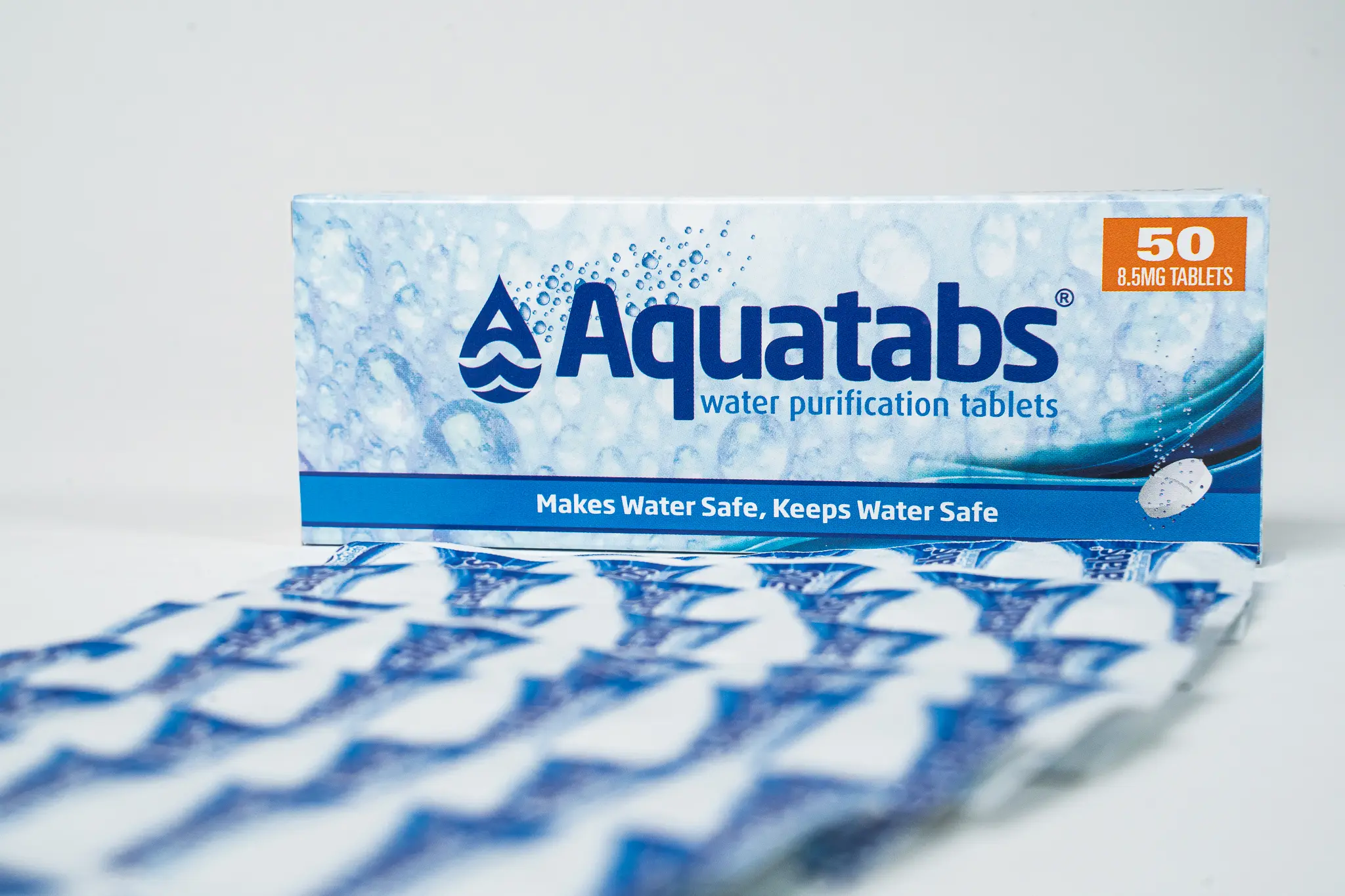
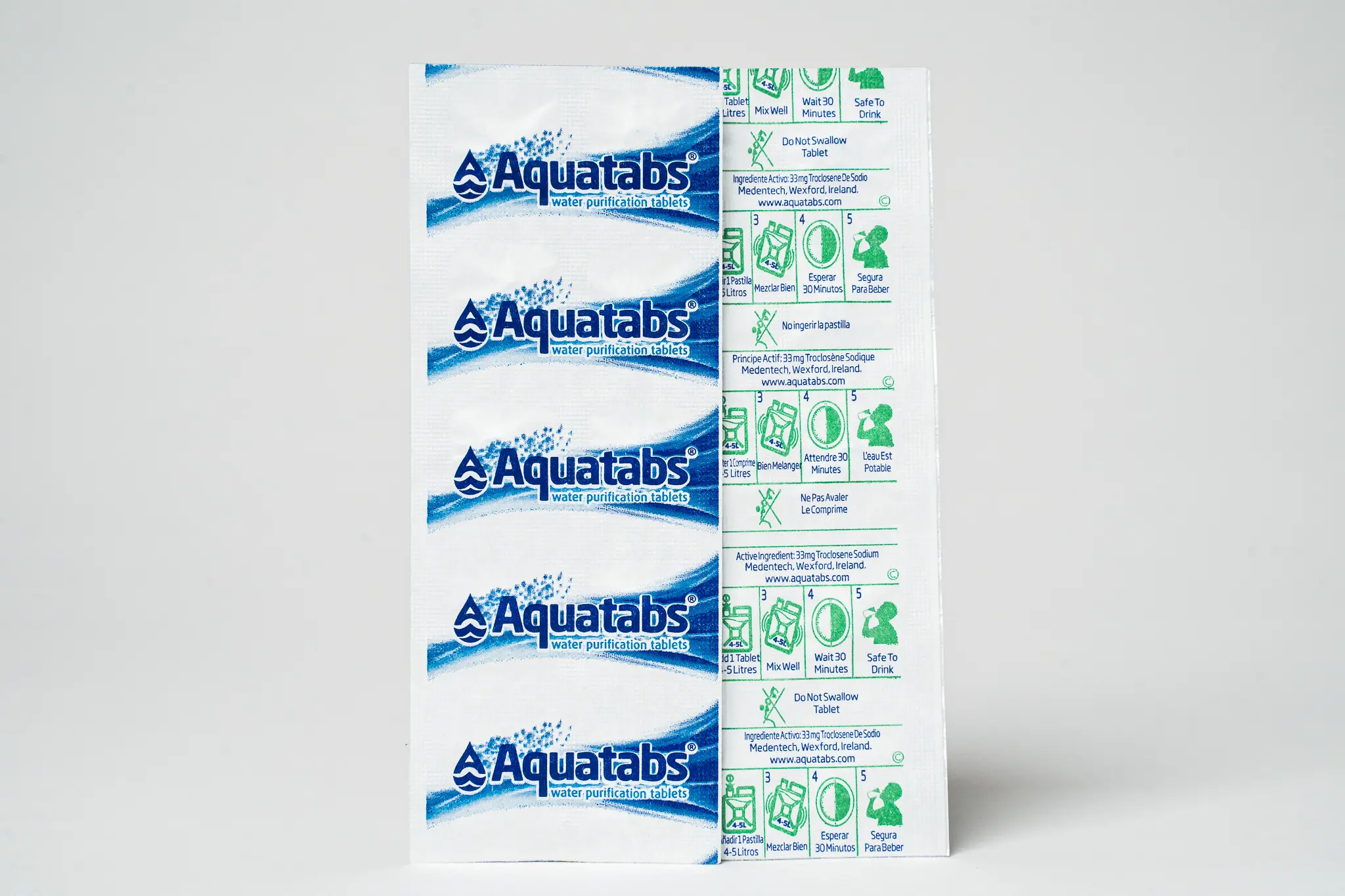
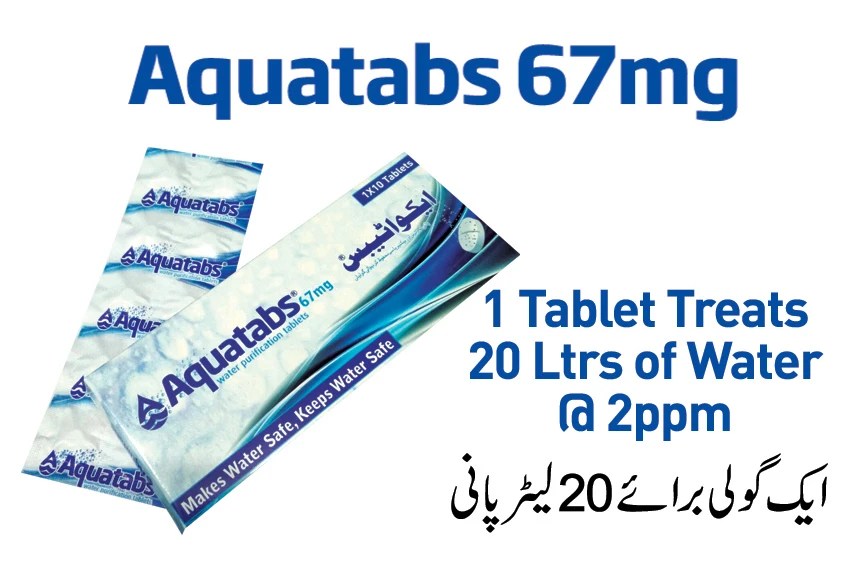
Consistent treatment of water at the household level, at the point of storage rather than merely at the point of supply, is therefore not a supplementary precaution but a primary defence. An Aquatabs tablet, dissolved in the volume of water indicated on the packaging, releases sodium dichloroisocyanurate, a chlorine-releasing compound that destroys the bacteria, including Escherichia coli and Salmonella Typhi, that are responsible for the waterborne illnesses documented across Hyderabad and Pakistan. Treating stored water with an Aquatabs tablet addresses precisely the vulnerability that research identifies as the greatest household risk: the gap between a supply system that is tested only occasionally and a storage environment that is persistently and invisibly prone to contamination. For a Hyderabad resident filling a rooftop tank, a domestic barrel, or a clay pot, the tablet is the reliable final step that neither the municipal network nor the household vessel alone can provide.
Sources: PCRWR (Pakistan Council of Research in Water Resources); WHO and UNICEF Joint Monitoring Programme (JMP) 2022; WHO Disease Outbreak News, Typhoid fever Pakistan, December 2018; peer-reviewed literature: PMC5573092, PMC8213103, PMC10015211.
Check the risk where you live
Answer three quick questions about your own water, and see what it means for your home. It takes less than a minute.
The right products for this
Related reading
- Case study · KarachiKarachi's Tanker Water Crisis: Contamination Risk and the Case for Point-of-Use Treatment
- Case study · LahoreLahore's Compounding Water Crisis: Arsenic in the Aquifer and Contamination in the Network
- Case study · FaisalabadWhen the Ground Itself Cannot Be Trusted: Arsenic and Industrial Contamination in Faisalabad's Drinking Water