
When the Tap Runs Contaminated: Larkana's Municipal Water Crisis
4 min read
Larkana, one of the largest urban centres in upper Sindh, draws its municipal water supply from a network of underground sources and ageing distribution infrastructure that was never built to keep pace with the city's expanding population. When the Pakistan Council of Research in Water Resources (PCRWR) conducted a multi-district water quality survey across Sindh, the results for Larkana were among the most alarming in the province. Of the 25 samples collected from the city's underground sources, 22 were found unfit for human consumption, a failure rate of 88 per cent that was formally submitted as evidence to the Sindh High Court. Larkana did not stand alone in that finding. Across the 14 districts surveyed, 77 per cent of all 460 samples were unsafe, confirming that what Larkana endures is a structural crisis shared by the overwhelming majority of urban Sindh.
What the PCRWR Survey Revealed
The dominant form of contamination in Larkana's water system, as across most of Sindh, is bacteriological. Samples drawn from community storage tanks and distribution points showed the presence of total coliforms, faecal coliforms, and E. coli, organisms whose detection in drinking water is a direct marker of faecal-oral contamination. The source of this contamination is well understood. In many districts of Sindh, including areas served by Larkana's municipal network, water pipes run in close proximity to ageing sewerage infrastructure. When either system develops cracks, or when pressure falls in the water main, raw sewage is drawn into the potable supply. By the time water reaches a household tap or a rooftop storage tank, whatever treatment was applied at source has long since been overwhelmed by renewed microbial load accumulated during transit.
According to the PCRWR, approximately 80 per cent of Pakistan's population has no reliable access to safe drinking water, and waterborne diseases account for an estimated 80 per cent of all illness recorded across the country.
Chemical and Physical Hazards Beyond the Bacteria
Bacteriological contamination is not the only risk carried by Sindh's groundwater. Peer-reviewed scientific literature identifies arsenic, fluoride, and elevated nitrates as recurring chemical contaminants in the province's aquifers. Arsenic concentrations in parts of Sindh have been measured well above the WHO permissible limit of 10 micrograms per litre. Prolonged exposure to elevated fluoride carries risks to bone and dental health that accumulate over a lifetime. In urban centres such as Larkana, where groundwater drawn for municipal use passes through deteriorating distribution infrastructure before reaching the household, the risk profile is compounded at every stage. Physical parameters, including turbidity and high total dissolved solids, further indicate that the water delivered to homes is routinely outside safe limits even before microbial growth in storage is considered.
The local risks that define Larkana's situation include:
- Cracked and leaking distribution pipelines running alongside open sewers, allowing faecal contamination to enter the pressurised mains
- Rooftop and ground-level storage tanks that are rarely cleaned, providing ideal conditions for microbial multiplication once any residual chlorine has dissipated
- Intermittent municipal supply that creates negative pressure in mains, actively drawing in contaminated groundwater or sewage at every break in service
- Chemical contamination from arsenic and fluoride in the underlying aquifer, which no household chlorination approach can address and which requires either source switching or specialist filtration
- A predominantly low-income population with limited means to purchase treated bottled water on a daily basis, creating sustained exposure across all age groups and compounding vulnerability in children already weakened by malnutrition
The Burden on Health
The consequence of sustained exposure to bacteriologically contaminated water falls hardest on children under five, the age group least able to mount an immune response to repeated infection. Diarrhoeal illness, typhoid, hepatitis A, and dysentery are the most common clinical outcomes, and the PCRWR estimates that 27,000 children in Pakistan die from diarrhoea-related illness every year, a figure that reflects the cumulative pressure of a water system that fails to reach safe standards at the point of use. Larkana's position at the most severely contaminated end of Sindh's provincial scale means that households in the city carry a disproportionate share of this burden.
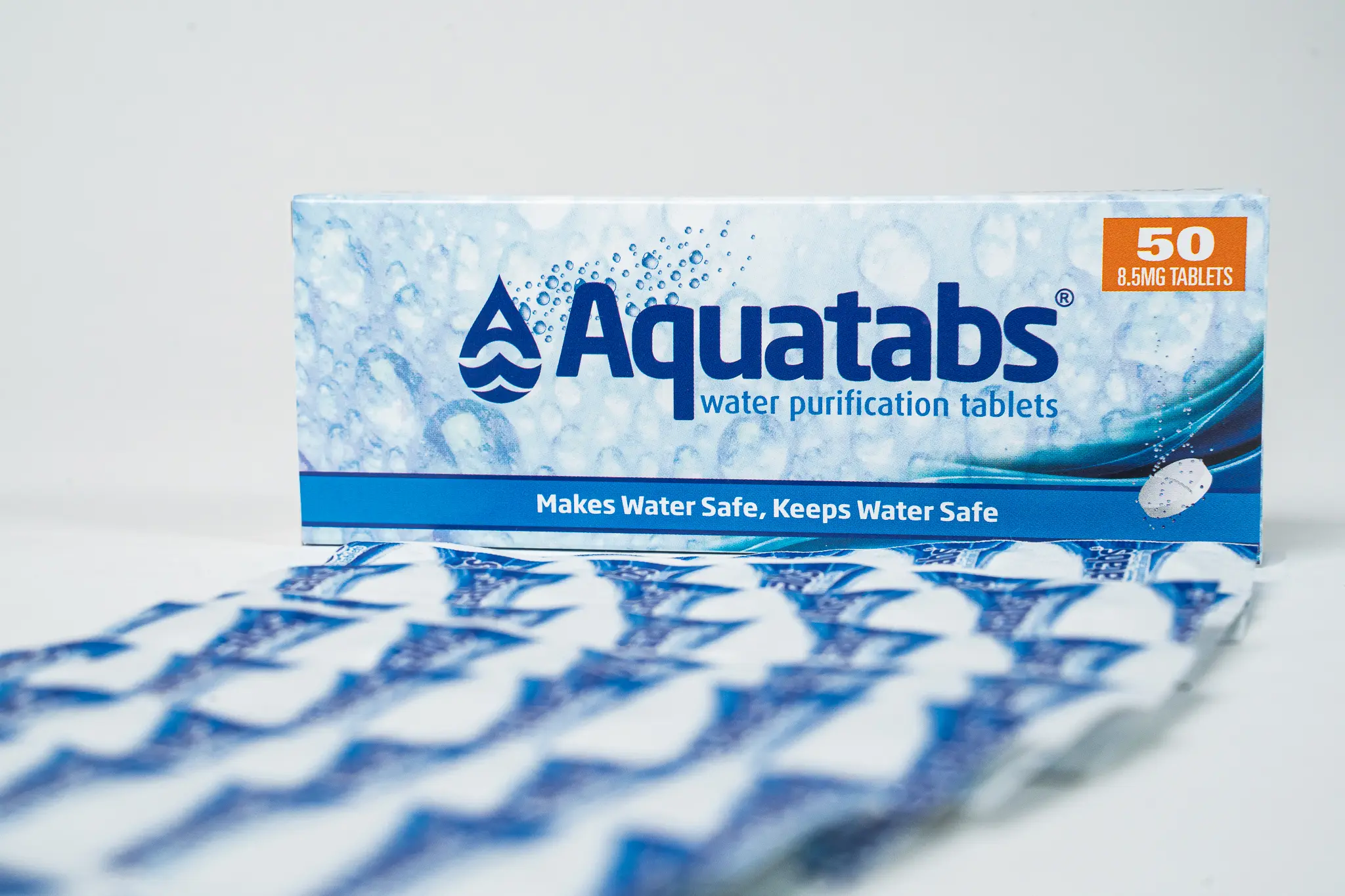
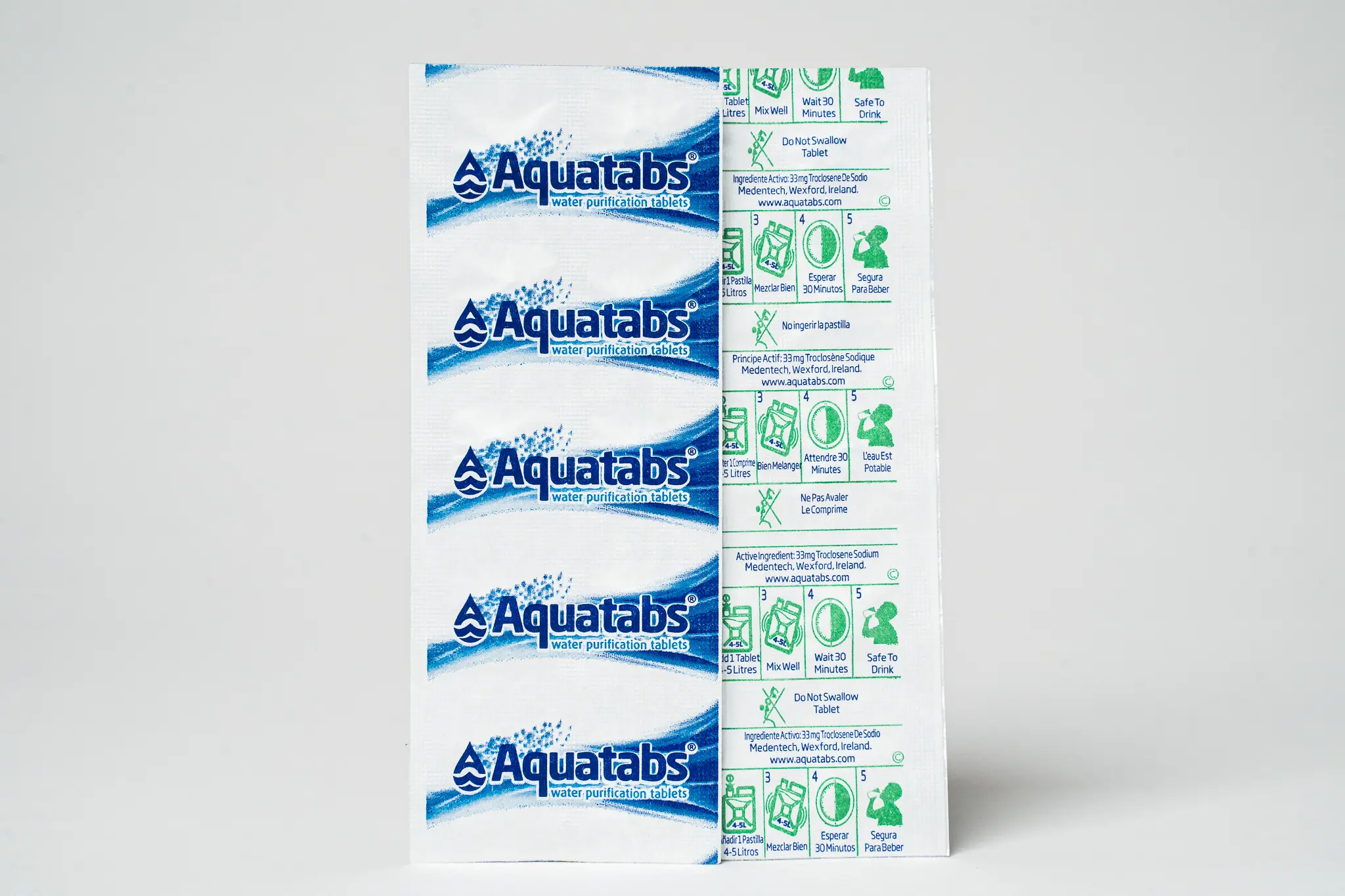
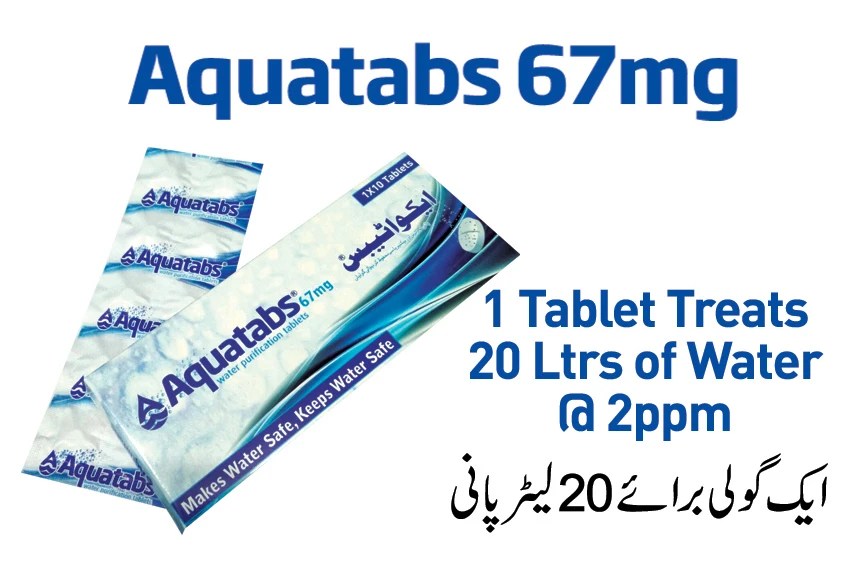
For households in Larkana drawing from the municipal supply or from rooftop storage tanks, the most practical intervention available at the point of use is to treat stored drinking water before it is consumed. A single Aquatabs tablet, dissolved in the correct volume of water and left to act for the time stated on the packaging, kills the bacterial and viral pathogens that cause the majority of waterborne illness. It addresses the contamination that enters water during distribution and storage, precisely the points where Larkana's supply fails most severely. For families without access to continuous clean supply, this step transforms water that appears visually clear but is microbiologically hazardous into water that is safe to drink, at a cost accessible even to low-income households.
Sources: PCRWR (Pakistan Council of Research in Water Resources), multi-district Sindh water quality survey submitted to the Sindh High Court (cited in Dawn, July 2017); PCRWR National Water Quality Monitoring Programme; PMC / NCBI, "Drinking Water Quality Status and Contamination in Pakistan"; Lupine Publishers, "Water Quality Assessment in Sindh, Pakistan: A Review"; WHO and UNICEF Joint Monitoring Programme (JMP) for Water Supply, Sanitation and Hygiene.
Check the risk where you live
Answer three quick questions about your own water, and see what it means for your home. It takes less than a minute.
The right products for this
Related reading
- Case study · KarachiKarachi's Tanker Water Crisis: Contamination Risk and the Case for Point-of-Use Treatment
- Case study · LahoreLahore's Compounding Water Crisis: Arsenic in the Aquifer and Contamination in the Network
- Case study · FaisalabadWhen the Ground Itself Cannot Be Trusted: Arsenic and Industrial Contamination in Faisalabad's Drinking Water