
Quetta's Shrinking Aquifer: Shared Sources and the Contamination Risk in Every Container
5 min read
Quetta, the capital of Balochistan and home to well over a million residents, including one of the largest concentrations of Afghan refugees anywhere in the world, occupies an environment that is among the most acutely water-stressed in Pakistan. The city has no meaningful surface water catchment. No river runs through it, no permanent canal supplements its supply, and the seasonal streams that descend from the surrounding mountains after winter snowmelt or summer rain do not persist long enough to serve as a managed resource. Quetta therefore draws almost entirely from the Quetta aquifer system, a network of underground formations accumulated over geological time, which the Pakistan Council of Research in Water Resources (PCRWR) has documented as critically over-extracted. Decades of population growth, compounded by large-scale migration, have driven extraction far beyond natural recharge rates. Borewells that once struck water at modest depths must now reach hundreds of metres in search of productive rock, and many shallow community wells across the city and its periurban fringes have gone dry without replacement.
A Province at the Extreme End of the National Crisis
The national picture is already alarming. Pakistan's per capita freshwater availability has fallen from approximately 5,000 cubic metres per person per year in 1951 to roughly 900 cubic metres today, according to national water data compiled by PCRWR, a figure that places the country below the internationally recognised threshold of water scarcity. At the same time, peer-reviewed research on drinking water quality in Pakistan estimates that approximately 80 percent of the population lacks access to safe drinking water, meaning that only around one in five Pakistanis is reliably served. Balochistan sits at the severe end of this national spectrum. It is Pakistan's largest province by area and its most sparsely populated, covering sweeping stretches of desert and semi-arid upland that receive among the lowest rainfall recorded anywhere in the country. For Quetta, the provincial capital in the middle of this landscape, the consequence is a structural supply deficit that forces households, businesses, and institutions to rely on tanker deliveries, shared neighbourhood standpipes, and private rooftop storage drums, none of which carries any guarantee of microbiological safety from source to point of use.
Peer-reviewed research on drinking water quality in Pakistan, corroborated by national monitoring data from PCRWR and assessments by UNICEF, estimates that approximately 80 percent of Pakistan's population lacks access to safe drinking water, making contaminated water one of the country's most pervasive and underreported public health conditions.
The Contamination Risk in Shared and Stored Water
The WHO and UNICEF Joint Monitoring Programme (JMP) defines safely managed drinking water as water that is accessible on premises, available when needed, and free of faecal and priority chemical contamination. By this standard, a significant portion of what Quetta's residents actually drink does not qualify, not because of the quality at the point of extraction but because of what happens at every step between source and glass. Tanker drivers fill their vehicles from sources that may themselves be unprotected. Hoses and tank interiors accumulate biofilm. Communal collection points, where many families fill containers at the same tap or standpipe, create conditions for cross-contamination. Rooftop drums, the dominant storage form across much of Quetta, are often left open to atmospheric dust and bird access and are cleaned infrequently. According to UNICEF and national health reporting, approximately 40 percent of hospital visits across Pakistan are attributed to waterborne illness, a burden that falls most heavily on children under five and on households in areas with fragmented or informal water supply.
The specific risks that converge for a household relying on shared or stored water in Quetta include the following:
- Tanker water of unknown provenance, drawn from unprotected sources or transferred through contaminated fittings during delivery
- Rooftop storage drums that are rarely cleaned and remain exposed to dust, bird droppings, and seasonal atmospheric pollution
- Communal standpipes and shared collection points where containers from many households come into contact with the same fittings
- Shallow wells that have not yet run dry but sit close enough to the surface to be vulnerable to infiltration from latrines and organic waste
- Seasonal flooding in the surrounding Balochistan lowlands that disrupts groundwater quality by forcing surface runoff into recharge zones
Each of these vectors introduces or amplifies faecal coliform contamination, the most commonly detected hazard in monitoring studies of Pakistan's informal water supply.
Closing the Gap at the Point of Use
No infrastructure programme will resolve Quetta's water scarcity within any near-term horizon. Aquifer recharge is a geological process measured in decades, the capital and institutional commitment required to extend a reliable piped network across a city that has grown under sustained pressure remains uncertain, and the population continues to grow. In this context, household water treatment is not a precaution reserved for emergencies. It is the most immediate and reliable intervention available to a family that cannot control the quality of water arriving at their door.
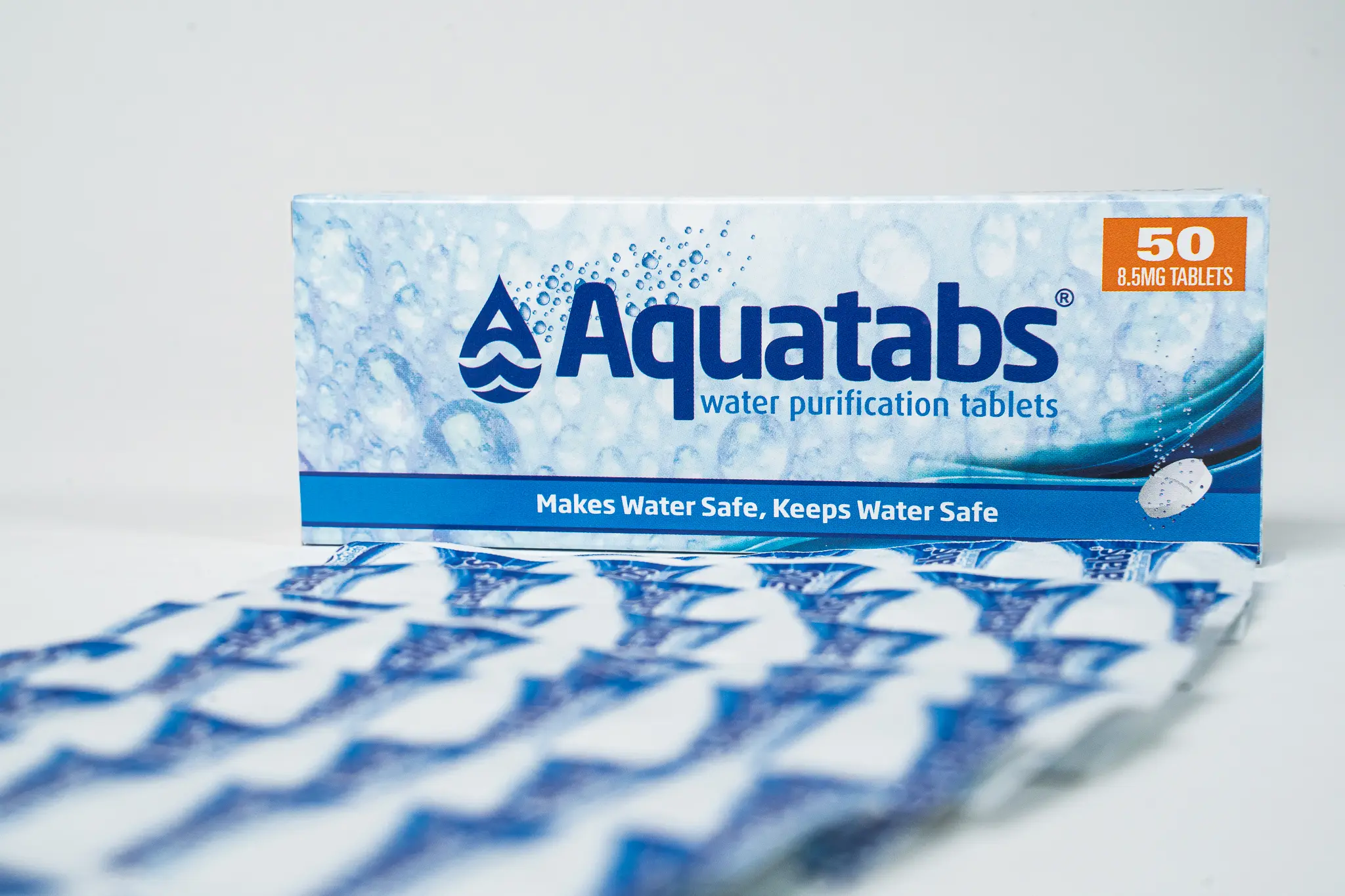
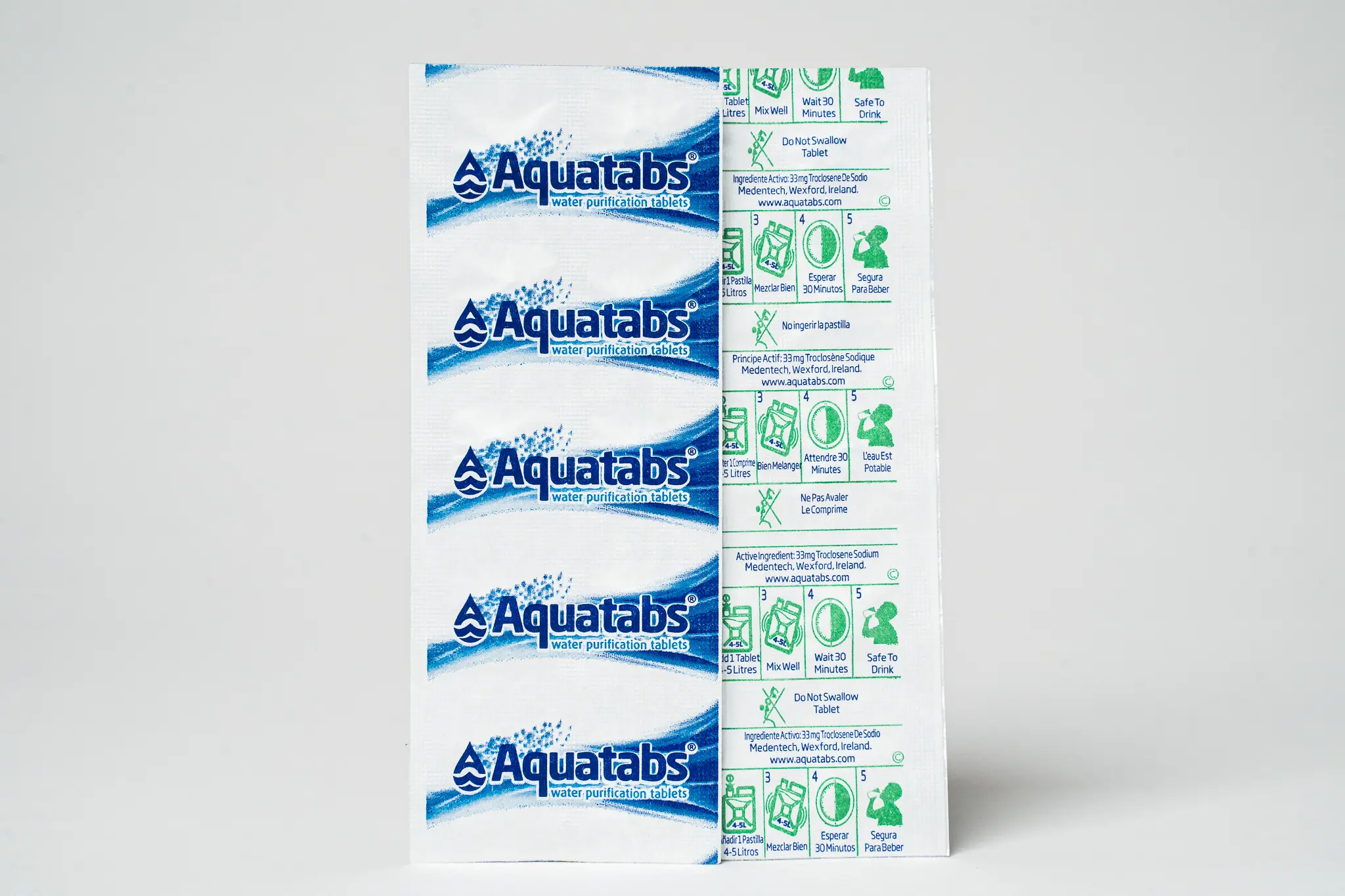
An Aquatabs tablet, dissolved in stored water according to the instructions on the pack, releases the active ingredient NaDCC (sodium dichloroisocyanurate) to neutralise the bacterial and viral pathogens responsible for diarrhoeal disease. Treatment happens directly in the container where the water is already being stored, requires no electricity, no special equipment, and no change to the household's existing water-carrying routine. For families in Quetta navigating shared standpipes, tanker deliveries, and rooftop drums, treating each container at the moment it is filled converts an uncertain supply into one that is microbiologically safe for drinking, cooking, and the preparation of infant feeds.
Sources: PCRWR (Pakistan Council of Research in Water Resources); WHO and UNICEF Joint Monitoring Programme (JMP); UNICEF Pakistan; World Bank; peer-reviewed literature on drinking water quality in Pakistan.
Check the risk where you live
Answer three quick questions about your own water, and see what it means for your home. It takes less than a minute.
The right products for this

Related reading
- Case study · KarachiKarachi's Tanker Water Crisis: Contamination Risk and the Case for Point-of-Use Treatment
- Case study · LahoreLahore's Compounding Water Crisis: Arsenic in the Aquifer and Contamination in the Network
- Case study · FaisalabadWhen the Ground Itself Cannot Be Trusted: Arsenic and Industrial Contamination in Faisalabad's Drinking Water