
Groundwater Under Siege: Industrial Runoff and Water Safety in Sialkot
5 min read
Sialkot is one of Pakistan's most export-productive cities, globally recognised for its manufacture of sports goods, surgical instruments, and leather garments. Behind this industrial prominence lies an environmental cost that accumulates quietly beneath the surface. More than 264 tanneries, over 900 leather sports goods manufacturing units, and hundreds of leather garment workshops operate in and around the city. Peer-reviewed research and documented reporting have established that approximately 52 million litres of industrial and municipal wastewater are discharged every day into Nullah Aik, Pulkhu drain, open sewerage channels, and agricultural land, and that none of the industrial units possess wastewater treatment facilities. The combined result is a persistent, multi-source assault on the shallow groundwater aquifer that supplies the city's hand pumps, motor pumps, and tube wells, the very sources on which the majority of Sialkot's residents and surrounding communities rely for daily drinking water.
How Industrial Effluent Reaches the Aquifer
The principal contamination pathway runs from factory floor to open drain to shallow aquifer. Leather tanning, the city's most polluting sub-sector, is a major consumer of chromium, a heavy metal that is both mutagenic and carcinogenic. Peer-reviewed literature has recorded chromium concentrations in groundwater studies of Sialkot's tannery manufacturing areas at levels consistent with exceedances of WHO guideline values. Beyond chromium, tannery and textile effluents carry elevated concentrations of arsenic, sulphates, and a range of organic compounds. These substances enter surface watercourses and, through the unlined beds of channels such as Nullah Aik, percolate into the shallow groundwater accessed by unprotected extraction points across the district. Research on Nullah Aik has confirmed that calcium loading, chemical oxygen demand, and biological oxygen demand all show statistically significant elevation attributable to anthropogenic discharge from Sialkot and Wazirabad, with the nullah identified as a primary conduit for heavy metal entry into the Chenab River. The pattern repeats across Punjab's industrial belt: comparable tannery clusters generate millions of litres of contaminated effluent daily, often with treatment infrastructure that has been non-functional for years, leaving communities with no engineered barrier between industrial discharge and drinking water.
A National Emergency With a Local Face
Sialkot's groundwater crisis sits within a broader national water safety emergency. The WHO and UNICEF Joint Monitoring Programme and national data collated by the Pakistan Council of Research in Water Resources (PCRWR) together paint a sobering picture of Pakistan's drinking water landscape. Research citing PCRWR findings has established that only around 20 per cent of Pakistan's population has access to safe drinking water. Waterborne diseases account for approximately 80 per cent of all disease burden and 33 per cent of deaths nationally. Diarrhoea accounts for an estimated 60 per cent of infant and child deaths in Pakistan, the highest proportion in Asia, and an estimated 670,000 children miss school every day due to water-related illness. Punjab, despite being the country's most economically developed province, is not insulated from groundwater risk: PCRWR assessments identify bacterial contamination as the most widespread threat, followed by arsenic, nitrates, and fluoride across the province's aquifers.
According to data from PCRWR national assessments and PMC-indexed peer-reviewed research, an estimated 70 per cent of Pakistani households consume bacterially contaminated water, and waterborne diseases are implicated in approximately 33 per cent of all deaths recorded nationally.
The specific risks concentrated in Sialkot's industrial and peri-urban zones include:
- Chromium contamination from leather tannery effluent percolating into shallow groundwater through the unlined beds of Nullah Aik and Pulkhu drain
- Arsenic and sulphate loading documented in groundwater and soil across tannery manufacturing areas spanning Sialkot, Lahore, and Karachi
- Bacterial and faecal contamination arising from the co-discharge of municipal sewage alongside industrial effluent into the same open waterways
- Seasonal flushing risk, where monsoon rainfall mobilises accumulated contaminants from open dumps and unlined channels into deeper groundwater
- Complete absence of industrial effluent treatment, leaving communities in proximity to tanneries and sports goods factories with no protective buffer between factory discharge and drinking water sources
- Agricultural re-entry of contaminants, where crops irrigated with water from Nullah Aik and Pulkhu carry chemical and biological hazards back into the food chain
Reporting drawing on local health data has attributed the majority of gastrointestinal diseases in Sialkot and its surrounding areas, including dysentery, cholera, and typhoid, to contaminated water from the combined discharge of municipal sewage and tannery effluents.
Treating What Cannot Yet Be Removed at Source
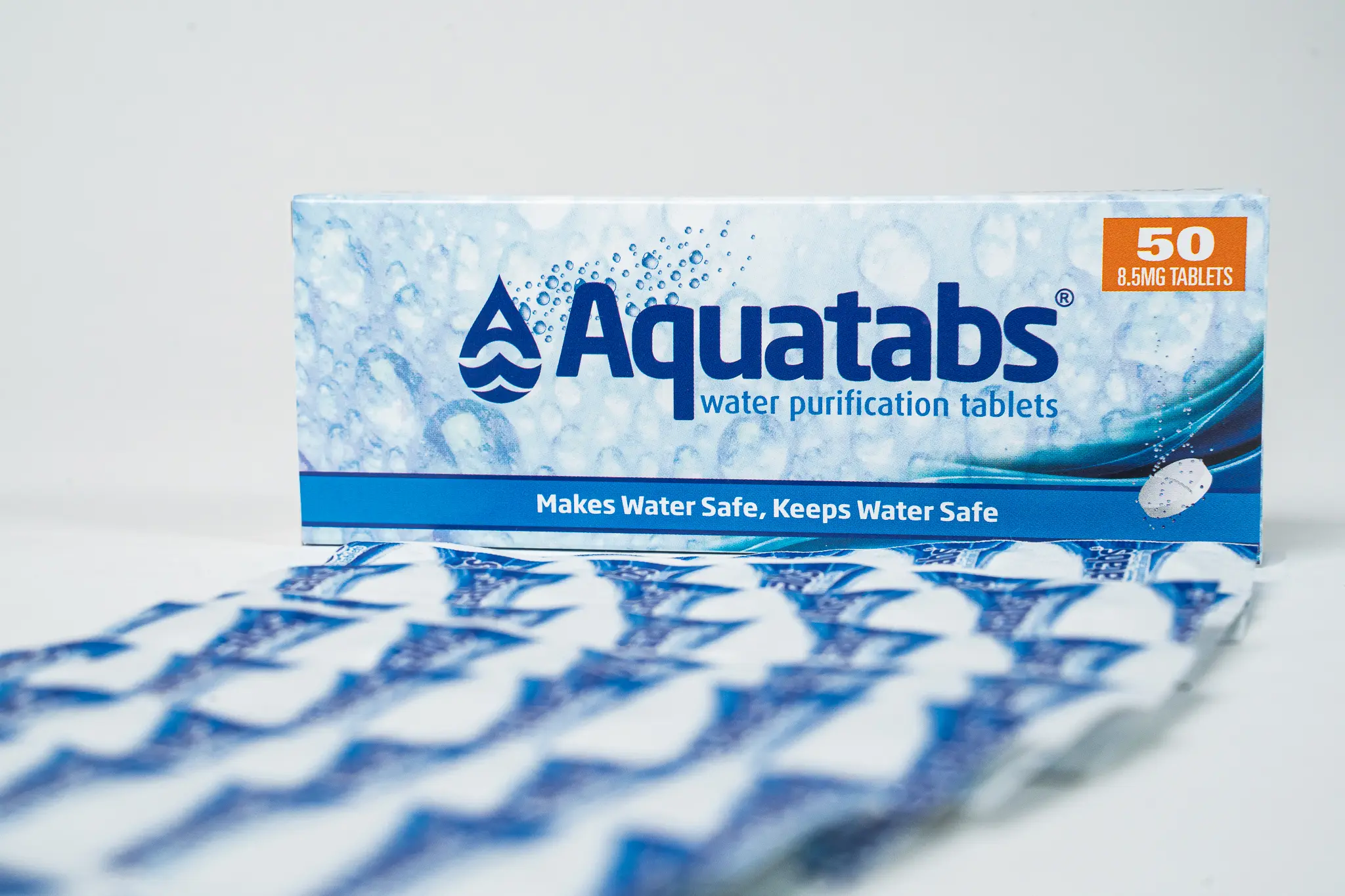
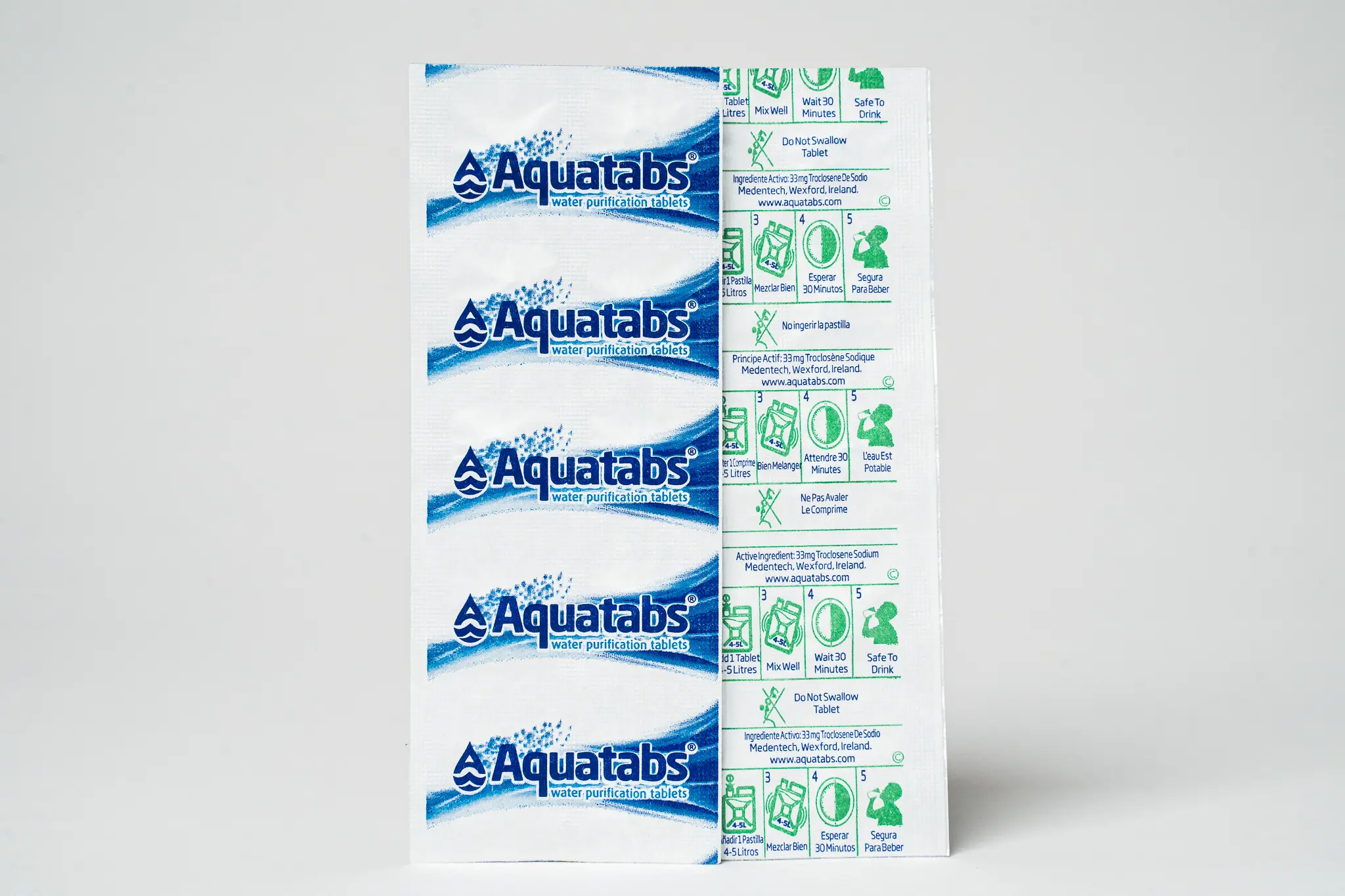
The structural remedies for Sialkot's groundwater contamination, including the commissioning of centralised industrial effluent treatment plants, the lining of drainage channels, and the sustained enforcement of discharge standards, are institutional interventions that take years to design, finance, and deliver. In the intervening period, each household that draws water from the district's tube wells, hand pumps, or stored containers faces a daily decision about the safety of that water. Where supply cannot be guaranteed free of biological contamination, point-of-use water treatment is the most reliable protection available to individuals and families. Treating stored drinking water with an Aquatabs tablet, following the instructions on the pack, kills the bacterial and viral pathogens responsible for the waterborne disease burden that communities in Sialkot bear disproportionately. A single tablet, correctly dissolved in the prescribed volume of stored water, delivers a measured, proven dose of the active ingredient to inactivate contamination at the point of consumption. It requires no infrastructure, no power supply, and no technical skill, and it works in precisely the conditions that make Sialkot's water story so urgent: stored water in a household container, drawn from a source that cannot be independently verified as safe.
Sources: UNICEF Pakistan (WASH programme); WHO and UNICEF Joint Monitoring Programme (JMP) 2023 and 2025 reports; PCRWR (Drinking Water Quality in Pakistan; National Threat of Arsenic in Groundwater 2023); PMC-indexed review: Drinking Water Quality Status and Contamination in Pakistan, 2017; PMC-indexed review: Water Sanitation Problem in Pakistan, 2022; peer-reviewed research on Sialkot tannery heavy metal contamination (Scientific Reports 2017; ScienceDirect 2024); water quality study of Nullah Aik, Journal of Plant and Environment, 2023; PMC study on Kasur tannery groundwater contamination, 2022; Business Recorder (Sialkot industrial pollution and health reporting).
Check the risk where you live
Answer three quick questions about your own water, and see what it means for your home. It takes less than a minute.
The right products for this

Related reading
- Case study · KarachiKarachi's Tanker Water Crisis: Contamination Risk and the Case for Point-of-Use Treatment
- Case study · LahoreLahore's Compounding Water Crisis: Arsenic in the Aquifer and Contamination in the Network
- Case study · FaisalabadWhen the Ground Itself Cannot Be Trusted: Arsenic and Industrial Contamination in Faisalabad's Drinking Water