
Sukkur's Indus-Drawn Supply: Contamination Risks in a River Under Pressure
4 min read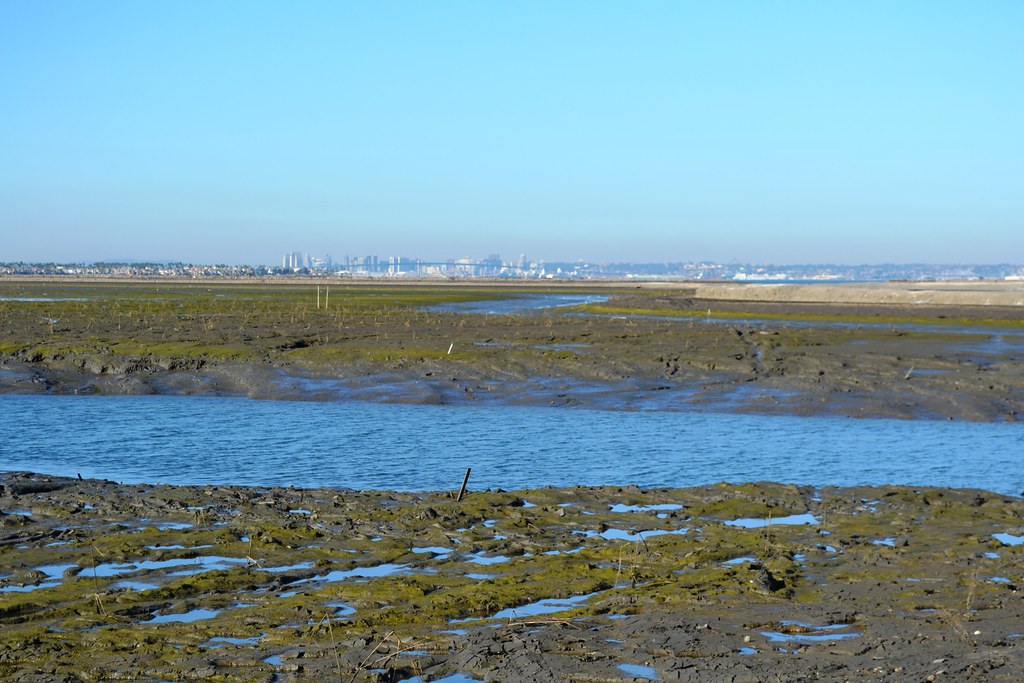
Sukkur sits on the western bank of the Indus in upper Sindh, drawing its municipal water supply from a river that simultaneously drains one of the largest contiguous irrigation networks on earth. The Sukkur Barrage, completed in 1932, commands a canal system that distributes water across millions of acres of Sindh and southern Punjab. What the agricultural landscape served by that network returns to the river is a mixture of pesticide residues, fertiliser leachate, and irrigation drainage carrying the cumulative burden of decades of intensive cultivation. Add the untreated and partially treated sewage entering the Indus from cities upstream, and the limited treatment capacity that characterises municipal supply systems across much of Sindh, and the water arriving at Sukkur household taps carries risks that persist even after boiling, because open storage vessels and aging infrastructure reintroduce contamination after the heat has passed.
The Scale of Pakistan's Water Safety Crisis
The breadth of the problem is documented by the WHO and UNICEF Joint Monitoring Programme, which tracks access to drinking water across countries and publishes granular breakdowns by province and income level. Pakistan consistently falls into the most stressed tier: only approximately one in five Pakistanis has access to safely managed drinking water, a standard that requires a supply to be available on premises, available when needed, and free from contamination at the point of use. Peer-reviewed literature on Pakistan's drinking water quality has found that roughly 80 percent of the population lacks access to reliably safe water. UNICEF Pakistan reports that diarrhoeal disease kills approximately 53,000 children under the age of five in the country every year, a toll driven principally by faecal contamination of drinking and stored water. The World Bank has documented the substantial annual economic burden placed on Pakistan by inadequate water supply and sanitation, a burden that falls with particular severity on Sindh, where both rural access rates and urban treatment infrastructure trail the national average.
UNICEF Pakistan reports that diarrhoeal disease kills approximately 53,000 children under five in the country each year, a figure driven principally by contaminated drinking and stored water.
Contamination Pathways in the Sukkur Corridor
The Pakistan Council of Research in Water Resources (PCRWR) has conducted successive rounds of its National Water Quality Monitoring Programme, finding in each round that a majority of surface and groundwater samples from across Sindh fail WHO bacteriological standards. Faecal coliform counts in excess of safe limits appear in both municipal and rural supply samples throughout the province. The Sukkur corridor concentrates several overlapping sources of contamination. The Sukkur Barrage irrigation command area, one of the most extensively cultivated landscapes in Asia, returns agricultural drainage to the river and to the shallow water table throughout the growing season, carrying pesticide residues, nitrates, and salinity. During the 2022 catastrophic floods in Sindh, UNICEF and the Red Cross recorded more than 90,000 diarrhoea cases in a single day across the province, a figure that illustrates how quickly overwhelmed treatment infrastructure translates into mass illness when the Indus breaches its banks. The specific contamination risks associated with Sukkur's supply and the wider Sindh Indus corridor include:
- Faecal coliform from sewage infiltrating aging or low-pressure distribution lines between the treatment plant and the household tap
- Pesticide and nitrate residues from irrigation drainage entering raw water intakes along the Sukkur Barrage command area
- Recontamination in household storage, where open pots, drums, and poorly sealed vessels become sites of renewed biological growth after drawing water
- Seasonal flooding, which overwhelms treatment plant capacity with sediment, debris, and elevated pathogen loads, as the 2022 Sindh floods demonstrated at scale
- Arsenic in shallow groundwater, posing an additional risk to households that shift to tube wells or hand pumps when the piped municipal supply is interrupted
Removing the Risk at the Point of Storage
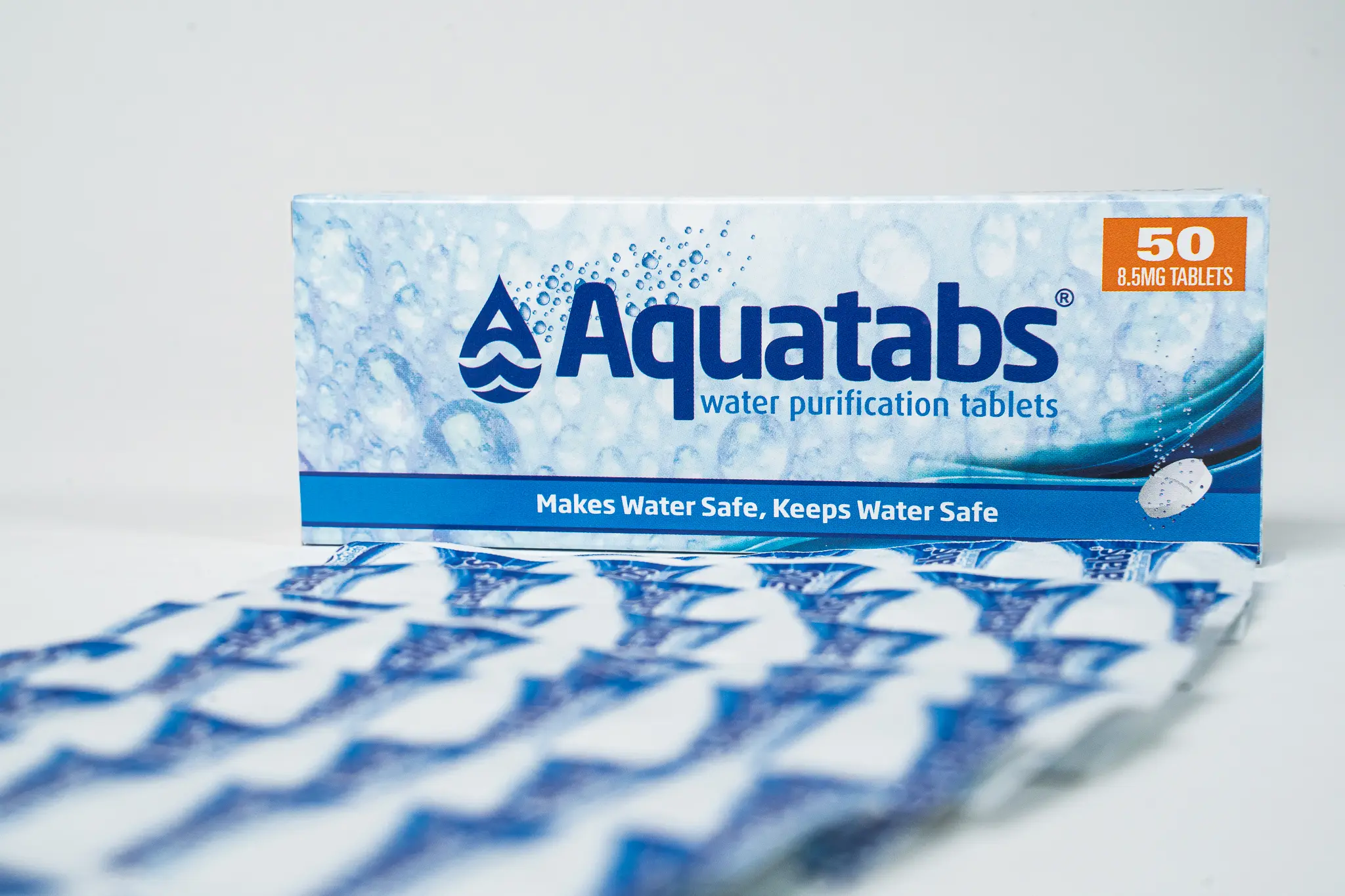
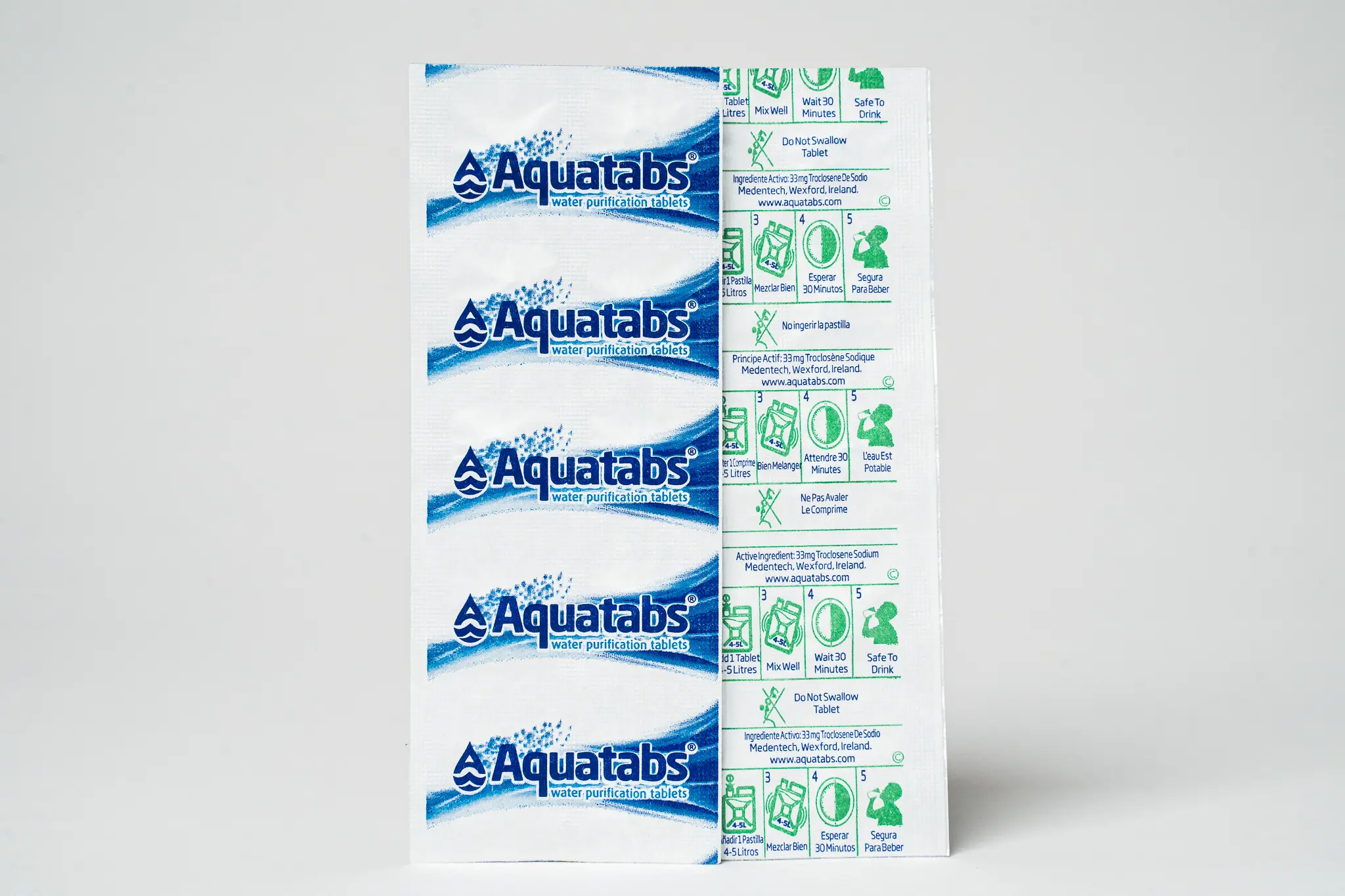
Point-of-use water treatment is the intervention most consistently recommended by WHO and UNICEF for settings where the supply chain between source and storage cannot be verified as safe end to end. A single Aquatabs tablet, used at the dose stated on the pack for the volume and clarity of water being treated, releases sodium dichloroisocyanurate, a chlorine-releasing compound that destroys bacterial and viral pathogens in stored water. The tablet acts precisely where the risk is concentrated: inside the storage vessel, after transportation and handling have already had the opportunity to reintroduce contamination. For households in Sukkur drawing water through an aging distribution network, for those relying on tanker deliveries during low-flow periods, and for families forced onto groundwater sources when flooding disrupts the piped supply, treating water in the storage vessel before drinking is among the most protective steps available against waterborne illness. Always follow the dosage instructions on the pack for the correct dose for the volume and turbidity of water being treated.
Sources: UNICEF Pakistan; WHO and UNICEF JMP; PCRWR (Pakistan Council of Research in Water Resources); World Bank; UNICEF and Red Cross 2022 Sindh flood reporting.
Check the risk where you live
Answer three quick questions about your own water, and see what it means for your home. It takes less than a minute.
The right products for this

Related reading
- Case study · KarachiKarachi's Tanker Water Crisis: Contamination Risk and the Case for Point-of-Use Treatment
- Case study · LahoreLahore's Compounding Water Crisis: Arsenic in the Aquifer and Contamination in the Network
- Case study · FaisalabadWhen the Ground Itself Cannot Be Trusted: Arsenic and Industrial Contamination in Faisalabad's Drinking Water